A reflection by ANZAAB bursary winner Dimity Kasz
Monday. I walk up Macquarie Street, Sydney, and make my way straight to Trim, a cast bronze of Matthew Flinders’ black cat. I see it as good luck and respect to visit Trim, and to ask for a great week at the State Library of New South Wales for Rare Book School.
In my application for the ANZAAB Bursary for the Australian & New Zealand Rare Book School I wrote “I am keen to strengthen my academic understanding of print in Australia. I'm interested in the social and political contexts in which the early printing presses arose, who the printed material was intended for, and how the printed word became dispersed throughout Australian society over the first century of settlement.”
Australian publishing in the nineteenth century with John Arnold was my chosen course, and over five days of hearty discussion and physical examples pulled from the stacks at the State Library of New South Wales, I had answers.
A printing press arrived in Australia with Governor Arthur Phillip and the First Fleet in 1788; however, it took another eight years before the press was put to work by the mysterious George Hughes. The first known printed item in Australia was a playbill for a small theatrical production of Jane Shore, put on in 1796 in Sydney’s first permanent theatre. The official Government Printer in Australia doesn’t become active until 1800, and the first book, New South Wales general standing orders, wasn’t printed until 1802 – fourteen years after the First Fleet’s arrival.
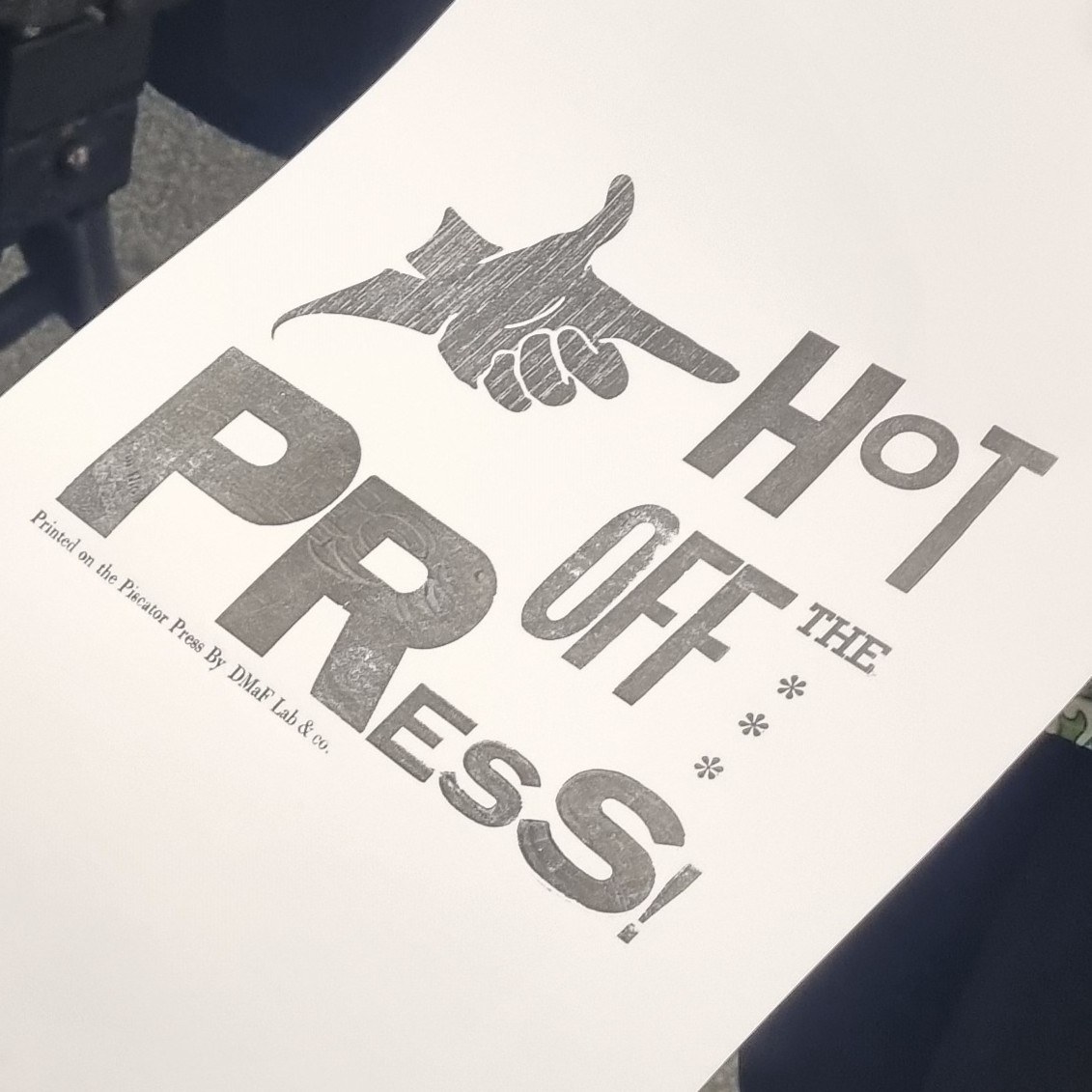
Day one of the course gave us accounts from the first fleeters: narratives of the journey, charting maps, first encounters with Indigenous populations, and the distinguishment of an emerging settler society through printed almanacks, books on ornithology, and most importantly, grape-growing for the production of wine in the colony. Day two (I visit Trim) gave us accounts of discovery and exploration, depictions of local fauna and flora in books mostly printed in Britain, and more guides to service the needs of the new population. Day three (I visit Trim) took us to Sydney University to see the Rare Books at Fisher Library, where we were treated to highlights of their collection, and excitingly, a demonstration of their 1879 letterpress printer – after spending so many hours poring over prints in books to decipher their medium, it was wonderful to experience the physical act of rolling ink onto a printing plate and transferring it onto paper. A visceral experience of the past. Thank you, Anne Goodfellow. Day four and five (I visit Trim) gave us books on and for a population settled into a new land: gardening, cookery, literary ambition, political persuasion, censorship, grappling with local Indigenous populations, and the array of material published in 1888 in celebration of 100 years of European settlement. John Arnold was fantastic in linking all these elements to wider contexts and events in the colony: the gold rush, the railways, the telegraph, the population boom, the prevailing attitudes. His natural interest in this period of Australia and the book trade was infectious and littered with anecdotes about buying and collecting. Thank you, John.
The arc of storytelling in this course was supported by the physicality of the books we were making study of. Their presence was treated with reverence.
I have handled antiquarian books and ephemera, early Australiana, but always in isolation, in appraisal of the one item in front of me. To see such a volume of foundational accounts, paradigm shifting, world-making texts in one room, with fourteen other people as keen as yourself, was something truly special, I’ll call it shared dreaming.
Each day Sarah Morley from the library prepared trolleys full of books for us to view in our study room. She made running back and forth from the library stacks seem glamorous as she placed these special objects on display for us, a rotisserie of material for eager eyes. I know she must have worked overtime morning and evening to prepare these for our viewing. Thank you, Sarah.
A highlight of attending Rare Book School was undoubtedly sharing a classroom with fourteen other Bookfellows: librarians, curators, archivists, collectors, book dealers, engagement officers for libraries, and all walks of individuals from the entangled web of the book world. Together in one room, we gained insights into publishing and early Australian settler society through the object of the book and John Arnold’s generous, jovial knowledge.
I was struck by how we all, as if naturally, wanted to share what we were seeing. We dutifully photographed the 230-year-old printed playbill, a hand-coloured engraving of a wonky emu, or a lithograph of a city block, and sent it out into the world via our phones. I like to think that the people who had a part in creating these objects would have recognised this impulse. Printed matter has always been about reaching out to others.
Answers to my initial questions: convicts, government coercion and attempts at a unified message gave rise to the early printing presses. Much of the material printed was intended for British eyes, until the 1860s when the richness and diversity of new life in Australia settled into itself and civic society grew. While much of the printed word in the first century of settlement became dispersed throughout Australian society through official channels such as government gazettes, it was also forward-thinking individuals who had lofty ideals for a free society enriched in the cultural ideals of the period. David Scott Mitchell, Louisa Lawson, and George Robertson stand out.
I visited Trim every morning, but I need not have asked for luck. Rare Book School felt like a rare privilege. In John Arnold I could not have asked for a better or more enthused teacher. The hosts, Sarah Morely, Maggie Patton and the State Library of NSW were unendingly generous in allowing us access to the facilities. Lastly, a huge thank you to ANZAAB for allowing me to spend five glorious days at Rare Book School.
Dimity Kasz
Kasz Books